This series breakdowns OEM/ODM (customization) listings for WHAT they do that works and more importantly delivers insights for WHY they work.
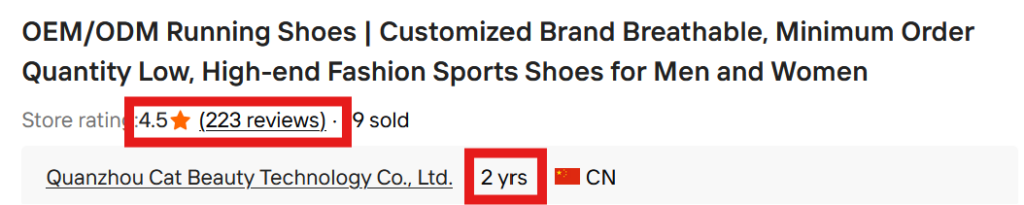
Today’s listing comes from a company who has managed to get 223 reviews and a 4.5 star rating, while only being on Alibaba for 2 years. (For perspective, many companies have less than 10 store reviews while having been on the platform for 5+ years ).
Here are four signs they use to signal they are low-risk suppliers and overcome the language barrier.
Visual Communication
One of the biggest – if not the biggest – barrier to communication between two international companies is language differences. Especially when the languages are as unrelated as English and Chinese.
For this reason, a lot of companies use automatic translation tools, which often either translate too literally and don’t make grammatical sense or translate so generally that any nuance is lost.
This company overcomes common translation problems through tactical use of images:
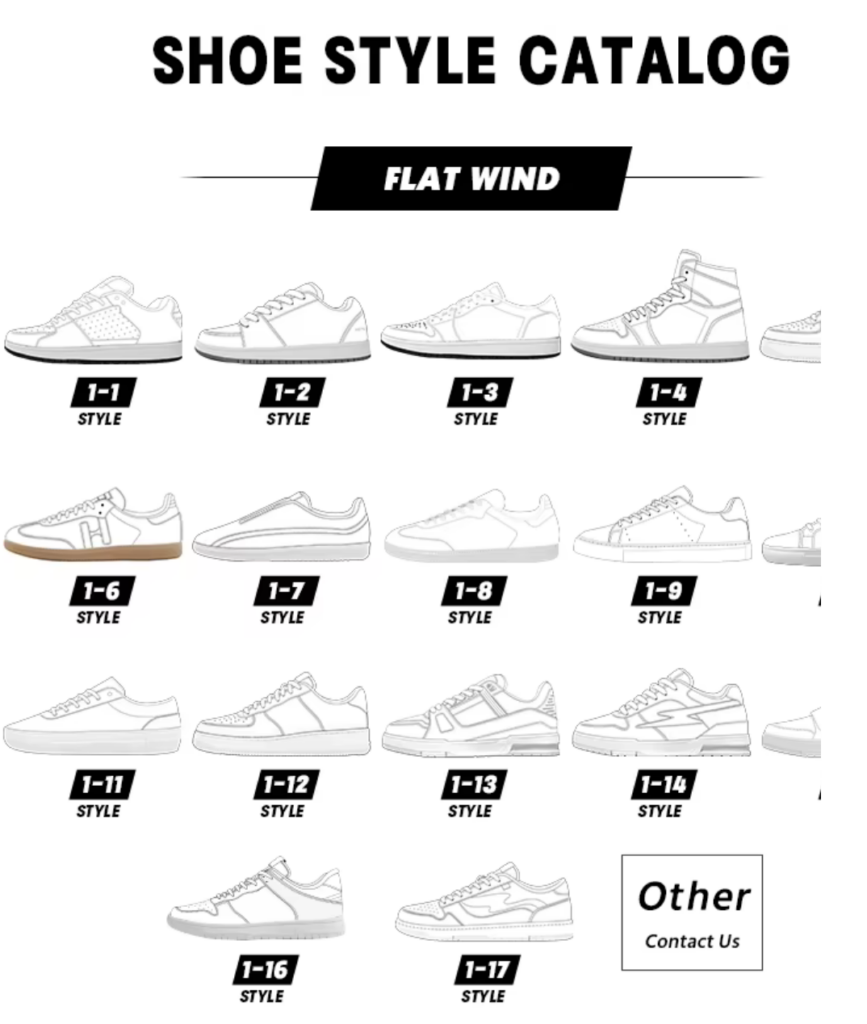
Instead of vague terminology such as “we make shoes according to your requirements” or “contact us for customization options”, they immediately show the buyer what they can do. The buyer and seller can simply reference the specific image instead of attempting to describe the one they mean.
And this doesn’t limit the seller either. Iif the buyer wants a shoe not included in the image, the buyer can point to similar images so both the buyer and seller are starting from the same point of reference.
Avoids “Trust us” language
I can’t tell you how many listings I’ve come across that express words that can be summed up as “trust us”.
- Trust we have experience
- Trust we have buyers like you
- Trust we have quality control
- Trust we can customize according to your expectations.
This company avoids the trap by acknowledging common problems with OEM shoe production lines:
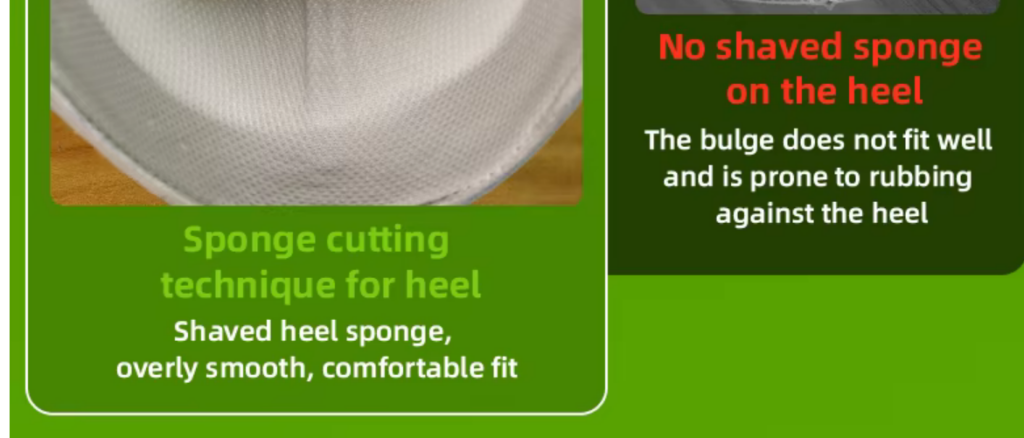
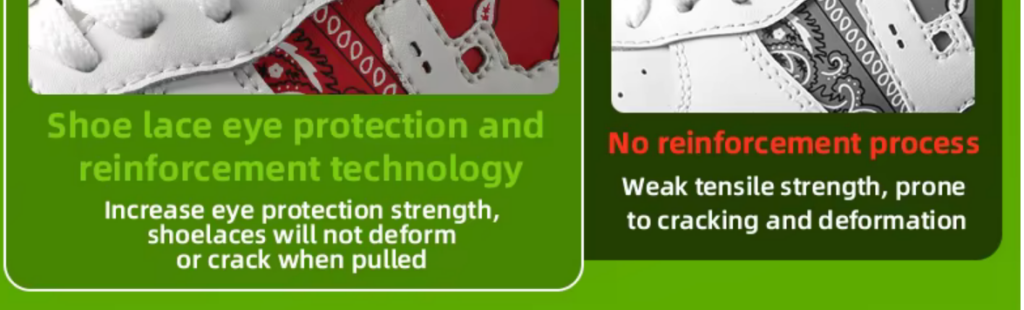
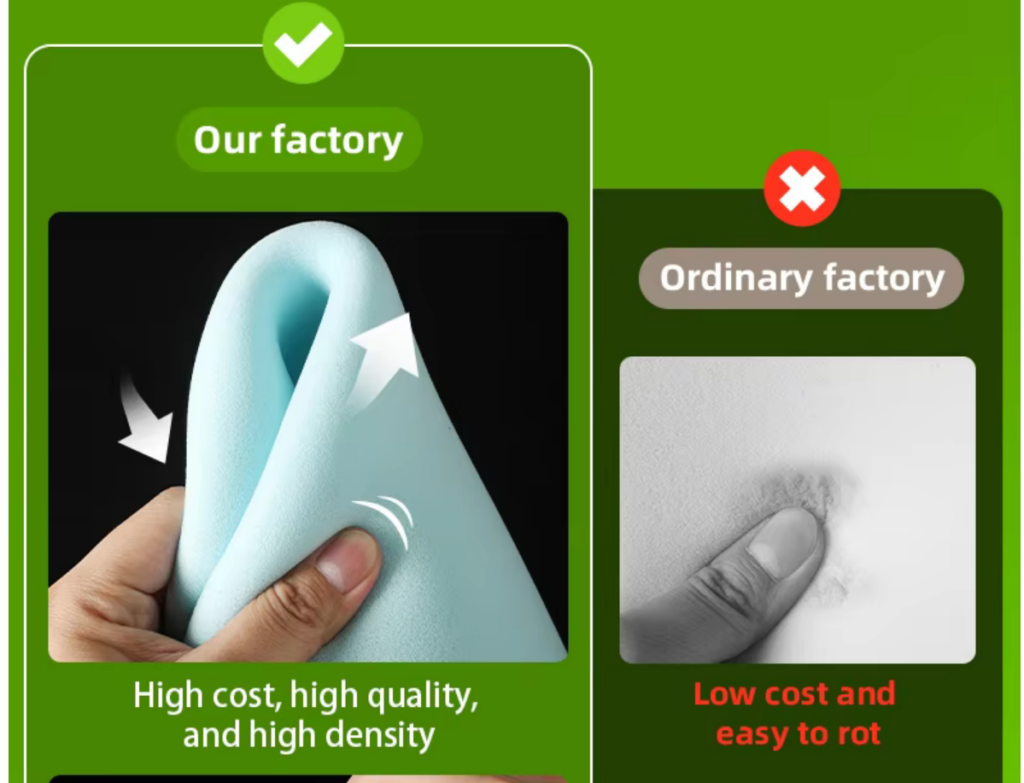
While these could go into more detail (to save the buyer some work) – the mere fact they are presented ahead of time allows the buyer to breathe a bit easier, and allows the seller to frame the upcoming conversation about how they prevent these common shoe problems.
Real Production Images
A buyer doesn’t just want to read “we can make that”. A buyer wants to know their products:
- Are sourced ethically
- Are made by professionals
- Can meet quality standards
This company addresses these in just 4 images.
- Employees are clearly adults with no children in sight.
- Factory is clean, with employees having dedicated places of operations.
- Multiple units with the same design are shown.
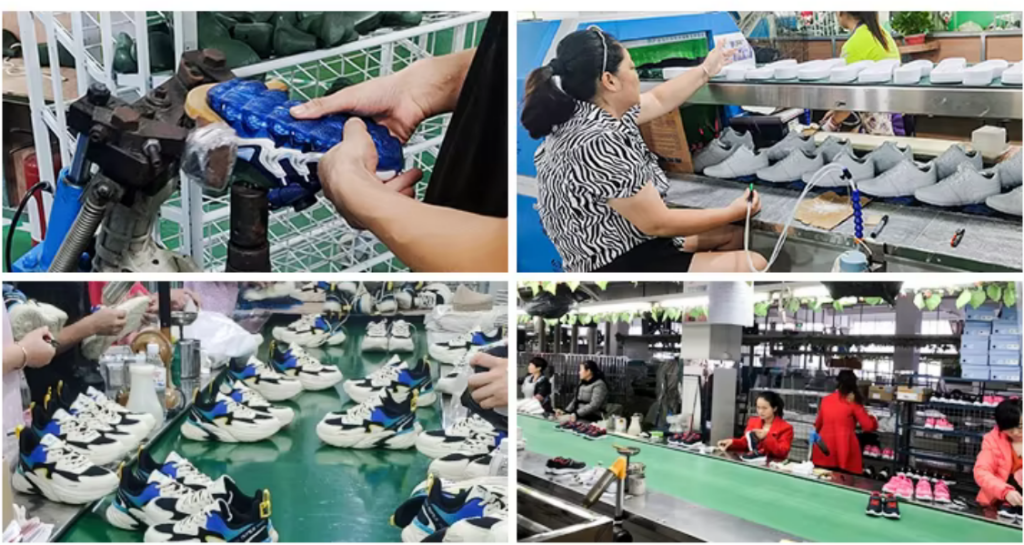
I’m not saying these images are enough on their own to assure the buyer (they’re not) – any quality buyer will do due diligence.
But it still puts this seller ahead of their competition who often uses stock images which clearly are not their production lines, or shows production lines which are clearly disorganized or empty of people and machinery.
Reframe
A lot of listings just sort of taper off at the end and become a hodgepodge of “in case you haven’t chosen to buy yet – maybe this random fact / picture will convince you!
The listings lose focus and become a bunch of irrelevant information about the company, unrelated products they are known for, or a bunch of random people posing for the camera with smiles with no context on who they are.
This company ends their listing with a reminder of everything they feel is important to remind the buyer whose mind – let’s be real – has often started to wonder, and perhaps is thinking more about lunch than the listing.
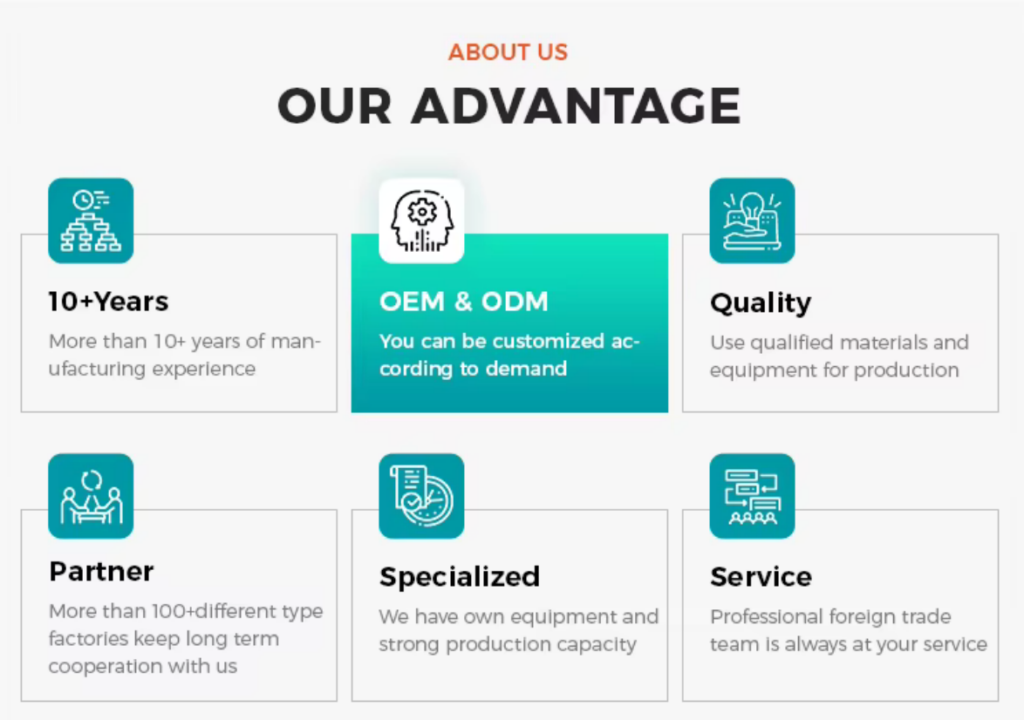
What does a buyer leave thinking about this company?
- 10+ Years – Reliable and Established
- 100 Partners – Good connections and network
- OEM & ODM – clear focus on customization
Key Takeways
To avoid miscommunication and signal they are low risk, this company:
- Used an image instead of words to convey nuance.
- Highlighted specific, common worries buyers have over “trust us” language.
- Showcased real production lines they may use to produce a buyer’s product.
- Put a summary at the end of the listing to refocus the reader on their core offering.